

The Faim announce European tour
THE FAIM have announced a headlining European tour! Set to take place from May through to July, the tour will see the Australian pop-rock band touring across mainland Europe and the…
Read more »
Documentary About Deadly GREAT WHITE Concert Fire To Premiere On REELZ Later This Month
“America’s Deadliest Concert: The Guest List”, a documentary about the infamous GREAT WHITE concert fire nearly two decades ago that killed a hundred people and injured hundreds more, will receive its premiere on Reelz on February 20. A trailer for the film is available below.
This past December, former GREAT WHITE singer Jack Russell, whose pyrotechnics ignited the deadly blaze on February 20, 2003 in Rhode Island, told Tulsa Music Stream about the documentary: “We took three years shooting this thing. I mean, it was a long time. A lot of footage — a lot of footage. But it’s really moving. It is really moving, touching, and it’s a beautifully shot piece of film. It lets you know how beautiful music is and how music can heal everything, no matter what people think. There’s a certain thing in music that is very healing, and it’s helped a lot of people through the aftermath of the fire.”
Russell also said that he wanted the tragedy to serve as a reminder to remain alert about public safety.
“Honestly, I haven’t been asked a question about the fire in — I can’t remember how many years now,” he said. “It’s been a long, long time. The public has a short memory, unfortunately. It was something that I hoped that people would remember, just because of the nature of it and the fact that we need to take care of ourselves when we’re out at places; we need to be conscious of our safety.”
Five years ago, Russell told Psycho Babble TV about the upcoming documentary: “What it is is partly my life story, as a kid growing up, and then it goes off into the fire, unfortunately, and the aftermath of that, and testimonies… not testimony, but… talks by the victims and their families and how it affected them.”
Russell said that parts of the movie are especially hard for him to watch “because a lot of people blame me.” He then corrected himself: “I wouldn’t say a lot, but they’re very vocal.” Still, he said he understood why some believe he should be held accountable for what happened fifteen years ago. “I look at it like this: if it makes it easier for them to grieve the loss of somebody close to them, then my shoulders are big enough,” he explained.
The fire at The Station nightclub in West Warwick began in an overcrowded club when pyrotechnics from Russell’s GREAT WHITE ignited illegal soundproofing foam lining the club’s walls.
“I’ve seen so many video tapes of pyro shooting off in that club with the foam — bigger stuff than we had — and it never happened,” Jack told Psycho Babble TV.” Why it happened that night… Who knows? I mean, it’s like a plane crash — it takes all these little things to fall in line for that one big thing to happen. So [the movie] gave me the opportunity to talk about how I felt and for me to apologize. Not a guilty apology, but because I just…
“I mean, I feel horrible that it happened,” he continued. “I lost a lot of friends that night — a lot of friends. People that I didn’t even know were even there. And people have said, ‘Well, he’s not remorseful.’ And they’ve gotta understand, when all this went down, my legal team, they said, ‘You cannot ever say you’re sorry, because it implies guilt.’ And I’m, like, ‘But I am sorry.’ [And they told me], ‘But you can’t say it.'”
According to Russell, at least one “really beautiful” thing came out of the tragedy. “There was a man named Joe; they call him ‘The Lizard Man,'” Jack said. “He was the worst, most badly burned of all the people. And he met his wife in the fire and they had a beautiful son. And his comment was, ‘If this wouldn’t have happened, I wouldn’t have met the love of my life.'”
The singer said that the documentary, which he hopes will help bring him some closure, is “really well done. The guy [making it]… He’s done Disney movies. He’s actually from that town. So he had to be really unbiased, which he really was — he just told it. And it’s really, really informative, and it delves into people’s lives.”
Russell added that he is “glad” the film was made. “It may not be the best thing in the world for me, but it’s very cathartic,” he said.
At least one relative of a Station fire victim was angered by Russell’s plan to make a documentary about the incident and discuss it in the upcoming book.
“I think it’s ruining all the positive strides that we’re now making to heal here in Rhode Island,” Jody King, whose brother Tracy was a bouncer at the Station, told the Associated Press in 2015. “If he wants to help, stay away, shut your mouth.”
Russell’s bandmate Ty Longley (guitar) was one of the people who perished in The Station blaze, which became the fourth deadliest fire in U.S. history.
In 2008, the band agreed to pay $1 million to survivors and families of the victims of the fire.
GREAT WHITE guitarist Mark Kendall founded the band with Russell in 1982. At the time of the fire, the group that was on the road was called JACK RUSSELL’S GREAT WHITE. Kendall later said he was asked to join Russell and his solo band on the tour to help boost attendance.
Official “America’s Deadliest Concert: The Guest List” description: “Fates of the innocent and guilty collide in a small New England town when pyrotechnics from an 80’s rock band spark America’s deadliest rock concert.
“On the night of February 20th, 2003… America’s deadliest rock concert began in West Warwick, Rhode Island, when the band GREAT WHITE ignited pyrotechnics inside a run-down roadhouse called The Station. The resulting conflagration killed 100 persons and grievously injured many others. It could fairly be said that music and rock culture drew one hundred innocent people to their deaths in The Station fire. ‘The Guest List’ explores how that same music and culture became sources of healing and comfort, at least for some, in the years thereafter.
“Many victims of The Station fire had been seduced by the siren song of rock celebrity. They met Jack Russell in the local Denny’s, a nearby motel or at a tattoo parlor, where he generously added their names to the show’s guest list. For many of those passionate fans, what appeared to be their very luckiest day turned out to be their last. Weeks after the fire, the actual charred, handwritten guest list was recovered from the club’s ashes.
“The film contrasts Jack Russell’s post-fire journey, in a search for redemption, with survivor Joe Kinan’s rebirth, courage and inspiration. along the way, we meet other survivors and victims’ families who have memorialized their loss through pursuits ranging from an exhibit of commemorative body art to re-immersion in the rock culture that initially brought them and their loved ones to the station nightclub. Throughout this journey we discover what many feel was legal injustice within local and state government.
“The documentary addresses timeless themes of personal responsibility, acceptance forgiveness and redemption. Its central characters struggle to cope in the aftermath of tragedy – some gracefully, and some less so. It is an object lesson in the tragic potential of poor decisions. ‘The Guest List’ remains timely, years after the station fire tragedy, as young people will always be attracted to concert events while some bands, promoters, and concert venues remain tempted to cut corners for cheap spectacle. ‘The Guest List’ is based in part on John Barylick’s narrative non-fiction work, ‘Killer Show: The Station Nightclub Fire, America’s Deadliest Rock Concert’. The result is poignant footage contrasting very different life stories. the guest list is a strikingly visual film. No one who watches ‘The Guest List’ will enter a concert venue again without first checking for the exits.”
“America’s Deadliest Concert: The Guest List” includes interviews with Russell, Dee Snider (TWISTED SISTER), Don Dokken (DOKKEN), Lita Ford and Michael Sweet (STRYPER).
Russell exited GREAT WHITE in December 2011 after he was unable to tour with the group due a series of injuries, including a perforated bowel and a shattered pelvis. Jack largely blamed these injuries on his alcohol and painkiller addictions as well as the prednisone drug he was prescribed.
Russell sued his onetime bandmates in 2012 over their continued use of the GREAT WHITE name after Jack had taken a leave of absence from the band for medical reasons. A short time later, Russell was countersued by Kendall, rhythm guitarist/keyboardist Michael Lardie and drummer Audie Desbrow, claiming the vocalist’s self-destructive behavior was damaging the GREAT WHITE name (they also alleged he was charging promoters less for his own touring version of GREAT WHITE). The parties settled in July 2013 without going to trial, with Russell now performing as JACK RUSSELL’S GREAT WHITE while the others are continuing as GREAT WHITE.
Read more »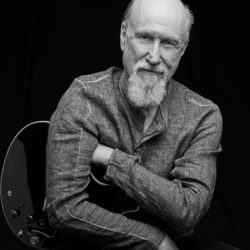
John Scofield’s Lyrical Lines
John Scofield is an absolute titan of jazz guitar. He’s had an illustrious solo career spanning over four decades and he’s shared the stage with the most important musicians of our time. In this lesson we’ll look at his brilliant single-line approach that endears him to jazz audiences around the globe.Ex. 1 is about as Scofield as we can get without consulting a patent lawyer, though a good case could be made that he took this idea from pianist Thelonious Monk. You can hear this descending whole-tone-based lick in many of Sco’s solos. The notes impart a strong Bb7#11 sound and the final note is pushed off the fingerboard and returned in a vibrato-like motion. That’s another great Scofield-ism that just can’t be ignored.Ex. 1Turn up that chorus pedal and hone your string-skipping chops with Ex. 2, a 1980s-style 16th-note funk lick. The basic sound is G7, but with a host of alterations. The G half/whole diminished scale (G–Ab–Bb–B–C#–D–E–F) is clearly important, but it doesn’t explain everything Scofield plays. As Scofield has mentioned regarding playing over vamps like this one, “I’m not really sure what I’m doing. It’s just an in-and-out bop style.” Feel free to include chromatic approaches and blues licks as done here as well.Ex. 2The IIm–V–I lick in Ex. 3 shows how Scofield could extend basic bebop mannerisms into something distinctly original. It’s clear that the thinking is F Lydian dominant (F–G–A–B–C–D–Eb) over both the Cm7 and the F7 chords. Scofield would occasionally “summarize” both chords as simply F7.Ex. 3Scofield’s now-classic albums with Medeski, Martin, and Wood have garnered mass appeal among funk and jam band enthusiasts over recent decades. Most of his playing on these records is roots-based and you’ll hear plenty of straightforward, blues-inspired licks like this one (Ex. 4) in B minor.Ex. 4The B Dorian (B–C#–D–E–F#–G#–A) lick in Ex. 5 is a good example of how Scofield develops a simple motive and answers it with contrasting material. Pinch harmonics can always be used in Scofield’s style. Don’t be concerned with these harmonics generating a specific pitch or even getting them to sound perfect—the randomness is all part of the charm.Ex. 5Superimposing ideas in novel ways is important to Sco’s approach and a great way to generate interest over static harmonies. Ex. 6 begins with a simple root/fifth figure in Bb that’s shifted up a half-step to B, and finally resolving back to Bb at the end. It’s an effective way to establish tension and release in a line.Ex. 6In recent years, Scofield has embraced a cleaner tone on some of his straight-ahead recordings. Think Vox amp and no RAT. Ex. 7 is an ever-flowing line that he might play over the first phrase of an F blues. Notice how the pickup bar is a G7 idea over the C7 and the first part of measure 1 is actually a C7 line over the F7. This kind of “misalignment” is something that intermediate players often miss, trying to faithfully match the chords all the time. Before long, the music is back on track and matching the chords in a more predictable manner, at least until the eclectic use of an A major line leading into the Bb7. Finish everything up with a Sco trademark major seventh double-stop.Ex. 7Ex. 8 is a particularly guitaristic way to play over the second phrase of an F blues. Even though the line is fingered in the 6th position, why not use an open string? The open high E (a #11) gives us the opportunity to get a cool angular sound to the Bb7 line that would otherwise be impossible.Ex. 8This phrase (Ex. 9), which begins in the 8th measure of the blues, shows Scofield’s mastery of bebop language. The D7b9 lick pushes into Gm7, which begins the final phrase of the 12-bar form. The IIm–V is clearly a simple sequence from C Lydian dominant (C–D–E–F#–G–A–Bb). The big lesson here is the importance of knowing your bebop fundamentals.Ex. 9Now that we’ve broken out the nuts and bolts of this lesson, let’s listen to few essential Scofield tracks to get our ears right. Even jazzers were making music videos in the 1980s.John Scofield Protocol“Protocol” from Still Warm, has a classic fusion groove thanks to drummer Omar Hakim and bassist Darryl Jones (both of whom played with Scofield in Miles Davis’ group). Sco’s tone is wide thanks to his signature chorus sound, an often-imitated element of his style.WeeWhen Enroute landed in 2004 it instantly became a classic guitar trio album. Recorded live at the Blue Note, it featured Sco’s longtime trio of drummer Bill Stewart and mentor/electric bassist Steve Swallow. “Wee” is a “rhythm changes” tune, which isn’t that groundbreaking, but the playing takes Denzil Best’s most well-known composition to another planet.Chicken DogIn 1998, Scofield teamed up with funk-jazz stalwarts Medeski, Martin, and Wood for A-Go-Go, which is a standout in Sco’s discography. This was the album that introduced him to the jam band scene and informed many of his more recent albums.
Read more » Ex-JUDAS PRIEST Guitarist K.K. DOWNING Is 'Over The Moon' About Being Nominated For ROCK HALL For Third Time
Former JUDAS PRIEST guitarist K.K. Downing says that he is “over the moon” about the fact that he has been nominated for the Rock And Roll Hall Of Fame induction for the third time.
JUDAS PRIEST was previously on the ballot for Rock Hall induction in 2020, but failed to receive enough votes to make that year’s class.
Having been eligible for induction since 1999, PRIEST was also on the ballot for the 2018 class of the Rock And Roll Hall Of Fame, but was ultimately left out of the inductee list.
On Wednesday (February 2), it was announced that JUDAS PRIEST is among the nominees for the Rock And Roll Hall Of Fame’s class of 2022. Inductees will be announced in May. The Rock And Roll Hall Of Fame 2022 induction ceremony will take place this fall. The date, venue, and on-sale information will be announced later.
Once again, the Rock And Roll Hall Of Fame has named the individual bandmembers that will enter should their group get inducted.
For JUDAS PRIEST, they picked current members Rob Halford (vocals), Ian Hill (bass), Glenn Tipton (guitar) and Scott Travis (drums), along with former members K.K. Downing (guitar), Les Binks (drums) and late drummer Dave Holland.
Earlier today (Saturday, February 5), Downing, who launched a new band called KK’S PRIEST in 2021, took to his social media to share a video message for his fans. He said (as transcribed by BLABBERMOUTH.NET): “Hey everyone. It’s K.K. here just stopping by to say a big hello. And yeah, I’m over the moon at the nomination for the Rock And Roll Hall Of Fame. So third time lucky. Here we go. Who knows? And I’m just working on a new album for you guys. I’m really excited about that. I hope everyone enjoyed the debut album, ‘Sermons Of The Sinner’, [from] KK’S PRIEST. We’re certainly looking forward to coming and playing some gigs for you as soon as we possibly can. So until then, hang tight.”
Earlier this week, Hill and Halford told Billboard that they would be happy to stand alongside Downing at a hypothetical Rock And Roll Hall Of Fame induction later this year. “It’s not a problem to us, no,” Hill said. “Ken was an integral part of this band for a very, very long time. He deserves to be there along with the rest of us.” Halford predicted that, “It won’t be as awkward as Ace [Frehley] and Peter [Criss with KISS’s Rock Hall induction]. I don’t think it’ll be awkward at all. I think you have to let all of that go because it’s the night that matters. It’s the moment that matters — but, again, the proverbial saying, we’ll cross that bridge when we get to it.”
In 2019, Halford was asked by Fox Sports 910’s “Freak Nation” if fans could expect to see any of the former PRIEST members joining the band on stage during a hypothetical Rock And Roll Hall Of Fame induction. He responded: “With something like the Rock And Roll Hall Of Fame, there’s a tinge of ‘what if’ [and] ‘whatever.’ It’s an open book.
“I know what you’re alluding to, and as I’ve had to [say] in the past, it’s just a case of ‘wait and see,'” he continued. “But it’s a celebration, and it’s 50 years of PRIEST, and, man, it’s gonna be great. Should we get in, it’s gonna be amazing.”
After host Kenny Sargent brought up the original KISS lineup’s controversial 2014 Rock Hall induction which was at least partly overshadowed by the musicians’ decision not to perform, Halford said: “[PRIEST is] not the first band that this has happened to, and on the day, some things turn out the way a lot of people want ’em.
“I was thinking about this the other day,” Halford added. “And this thing came into my head: ‘Jim, the needs of the many outweigh the needs of the few, or of the one.’ Spock [in] ‘Star Trek’. When he goes in the radiation room. Isn’t that great? … That’s a t-shirt, or an inspirational card.”
Downing previously told Rockin’ Metal Revival that there is a very good chance that he would perform with his former bandmates again if PRIEST gets the nod. “Oh, I think absolutely,” he said. “I mean, why wouldn’t you, really? It’s a special thing. We’re all of an age now. These opportunities only come once in a lifetime. And it seemingly takes a lifetime to get into the Rock And Roll Hall Of Fame. I’ve always said, there’s no such thing as a young legend, right? [Laughs] So, while we’re still here, it would be great to receive that accolade and put on a great performance and put that one to bed.”
Downing left PRIEST in 2011 amid claims of band conflict, shoddy management and declining quality of performance.
In 2019, Downing said that he reached out to JUDAS PRIEST about taking part in the band’s 50th-anniversary tour but that their response was that they were not interested in including him in the celebrations.
In 2018, Downing revealed that he sent two resignation letters to his bandmates when he decided to quit JUDAS PRIEST. The first was described as “a graceful exit note, implying a smooth retirement from music,” while the second was “angrier, laying out all of his frustrations with specific parties.”
Downing later said that he believed the second letter was “a key reason” he wasn’t invited to rejoin PRIEST after Tipton’s decision to retire from touring.
In his 2018 autobiography “Heavy Duty: Days And Nights In Judas Priest”, Downing wrote that he told Tipton and PRIEST co-manager Jayne Andrews that he had “hated” them both “since 1985.” Last year, he explained his outburst to Classic Rock magazine: “I was angry. Glenn had formed a relationship with Jayne from day one, and it felt a bit like a John-and-Yoko situation. I didn’t like that.”
Downing is joined in KK’S PRIEST by former JUDAS PRIEST singer Tim “Ripper” Owens (vocals), along with guitarist A.J. Mills (HOSTILE), bassist Tony Newton (VOODOO SIX) and drummer Sean Elg (DEATHRIDERS, CAGE).
#heavymetal #kkspriest #rrhof #heavyrock #judaspriest pic.twitter.com/XLz8AX9lnJ
— K.K.Downing (@kkdowning_metal) February 5, 2022
ALL THAT REMAINS Frontman Calls SPOTIFY CEO 'A D**k', Says Streaming Giant Doesn't Pay Artists Well
ALL THAT REMAINS frontman Phil Labonte is the latest musician to take issue with Spotify CEO Daniel Ek’s suggestion that artists need to be more prolific in the streaming age.
For years, Spotify has been criticized for offering paltry payouts to musicians and songwriters, with some claiming that the service gives major-label artists an unfair advantage via playlist placement and other promotional avenues.
In an interview published in July 2020, Ek told Music Ally: “Even today on our marketplace, there’s literally millions and millions of artists. What tends to be reported are the people that are unhappy, but we very rarely see anyone who’s talking about… In the entire existence [of Spotify], I don’t think I’ve ever seen a single artist saying, ‘I’m happy with all the money I’m getting from streaming,’ stating that publicly. In private, they have done that many times, but in public, they have no incentive to do it. But unequivocally, from the data, there are more and more artists that are able to live off streaming income in itself.
“There is a narrative fallacy here, combined with the fact that, obviously, some artists that used to do well in the past may not do well in this future landscape, where you can’t record music once every three to four years and think that’s going to be enough,” he continued.
“The artists today that are making it realize that it’s about creating a continuous engagement with their fans. It is about putting the work in, about the storytelling around the album, and about keeping a continuous dialogue with your fans.
“I feel, really, that the ones that aren’t doing well in streaming are predominantly people who want to release music the way it used to be released,” he added.
A number of notable artists have since fired back at Ek over his suggestion that artists need to churn out more content if they want to the same money they used to, with many in the music community — including TWISTED SISTER singer Dee Snider, former SKID ROW frontman Sebastian Bach, ex-DREAM THEATER drummer Mike Portnoy and STRYPER’s Michael Sweet — saying that’s just not how the creative process works.
Labonte offered his take on Ek’s comments during a recent appearance on “The Porcupine” podcast. Saying that he is “not a fan of Spotify personally,” Phil explained that the streaming giant doesn’t pay artists “well” for hosting their music on the platform. “And [Ek] made some snide remark about… He’s, like, ‘Musicians need to understand, it’s not a thing where you put out a record every two years’ and blah blah blah,” he said (as transcribed by BLABBERMOUTH.NET). “It’s, like, you can be the person that came up with a creative, destructive force, and that’s fine, and that’s part of a free market and stuff, but when you’re a dick about it, you’re still a dick. If you’re just, like, ‘Well, you guys have gotta adapt to the market,’ it’s, like, look, there are a lot of artists that are in contracts that can’t just put out music every couple of days. Thankfully, I’m almost out of my contract — I’ve got one more record, and we’re recouped — so I’m in a uniquely good position; not ‘uniquely,’ but an exceedingly rare good position. Most artists aren’t. So when he is so dismissive of the effect his creation has on the music industry and then to glibly act as if 0.0007 cents for every spin is fair, I don’t think that’s… At the very least, it’s not someone that I wanna hang out with or someone that I wanna speak positively of. Maybe it’s not illegal, maybe it’s not immoral, but I’m kind of just, ‘Well, you’re kind of a pile, and I wouldn’t wanna be your friend.'”
Earlier this month, Spotify reported a 24% increase in revenue in the quarter to $2.7 billion as total monthly active users jumped 18% to 406 million. The company reported a net loss of $39 million.
Read more » MÖTLEY CRÜE's NIKKI SIXX Fires Back At EDDIE VEDDER, Calls PEARL JAM 'One Of The Most Boring Bands In History'
MÖTLEY CRÜE’s Nikki Sixx has blasted PEARL JAM as “one of the most boring bands in history” after Eddie Vedder revealed that he “despised” the glam-metal scene of the late 1980s.
In an in-depth interview with The New York Times to promote his upcoming solo album, Vedder discussed a variety of topics, including what “ripples” of change he believes the Generation X / alternative rock culture of the early ’90s may have been responsible for.
“You know, I used to work in San Diego loading gear at a club,” Vedder said. “I’d end up being at shows that I wouldn’t have chosen to go to — bands that monopolized late-’80s MTV. The metal bands that — I’m trying to be nice — I despised. ‘Girls, Girls, Girls’ and MÖTLEY CRÜE: [expletive] you. I hated it. I hated how it made the fellas look. I hated how it made the women look. It felt so vacuous.”
The PEARL JAM singer continued: “GUNS N’ ROSES came out and, thank God, at least had some teeth. But I’m circling back to say that one thing that I appreciated was that in Seattle and the alternative crowd, the girls could wear their combat boots and sweaters, and their hair looked like Cat Power’s and not Heather Locklear’s — nothing against her. They weren’t selling themselves short. They could have an opinion and be respected. I think that’s a change that lasted. It sounds so trite, but before then it was bustiers. The only person who wore a bustier in the ’90s that I could appreciate was Perry Farrell.”
On Friday (February 4), Sixx took to his Twitter to respond to Vedder’s comments, writing: “Made me laugh today reading how much the singer in PEARL JAM hated @MotleyCrue. Now considering that they’re one of the most boring bands in history it’s kind of a compliment isn’t it?”
Back in 2019, Sixx spoke to U.K.’s Kerrang! spoke about how the rise of grunge in the early 1990s forced most hard rock bands off the radio and MTV, with album and tour sales plummeting. Asked if it was fair that CRÜE was lumped in with bands such as POISON and WARRANT, Nikki replied: “I have to say that I don’t think that NIRVANA and PEARL JAM killed the bands you mention, I think that they killed themselves. They were making copycat music. We, on the other hand, simply imploded.”
He continued: “Forget about the lifestyle for a minute — the thing that ultimately allowed us to pull ourselves through was the music that we made, and how good we can be when we really put it together. Every great band has hills and valleys; they start at the bottom and if they’re lucky they make it to the top of the mountain. But eventually you have to go down. Very few bands are lucky enough to become popular and stay popular forever. That’s just the way music is — it changes, technology changes, fashion changes, and social outlooks change. But again, today a lot of bands are just so fucking safe.”
Upon release in September 1991, NIRVANA’s “Smells Like Teen Spirit” wreaked confusion upon the hair metal vanguard, putting an end to an era dominated by glamorous, androgynous and sparkly rock stars who absolutely saturated the radio waves and were almost exclusively what aired on MTV.
Former MÖTLEY CRÜE singer John Corabi told Newsday in a 2014 interview that the CRÜE album he sang on was a commercial disappointment because the music scene had changed, with hair metal brushed aside for grunge.
“Everybody was listening to ALICE IN CHAINS and SOUNDGARDEN,” Corabi said. “At that point, we were considered passé.”
According to Corabi, CRÜE’s ill-fated 1994 American tour ” was a nightmare. We weren’t selling tickets. It was just horrible,” he said.
After working with Corabi for two years on a follow-up album, “Generation Swine”, CRÜE dropped the singer and reunited with Vince Neil.
Despite Neil’s return, “Generation Swine” sold poorly when it was released in 1997.
Nikki Sixx photo credit: Jason Shaltz of SiriusXM / Eddie Vedder photo credit: Danny Clinch
Made me laugh today reading how much the singer in Pearl Jam hated @MotleyCrue. Now considering that they’re one of the most boring bands in history it’s kind of a compliment isn’t it?#TheStadiumTour #RocknRoll
— ? (@NikkiSixx) February 5, 2022
SCOTT GORHAM Explains Decision To Leave BLACK STAR RIDERS
Scott Gorham says that he left BLACK STAR RIDERS in order to “put a hundred percent concentration and effort” into getting THIN LIZZY back on the road.
Gorham was in BLACK STAR RIDERS for nearly a decade, having formed the band in 2013 with other THIN LIZZY members after deciding to write and record new music under a new moniker. BLACK STAR RIDERS’ original lineup was completed by vocalist Ricky Warwick, guitarist Damon Johnson, bassist Marco Mendoza and drummer Jimmy DeGrasso.
BLACK STAR RIDERS announced Gorham’s departure last September, with Warwick saying in a statement: “We are very sad to see Scott go, but we discussed a very heavy world touring commitment on the new record and Scott decided he wanted to concentrate just on THIN LIZZY — and being the legend he is, none of us can blame him.”
Gorham discussed his decision to leave BLACK STAR RIDERS in a new interview with “The Hook Rocks!” podcast. He said (as transcribed by BLABBERMOUTH.NET): “It was right in the beginning of the whole pandemic thing. I know Ricky wanted to do an album straight off the bat. And I said, ‘Well, I can’t and I won’t get on a plane right now, for god’s sakes. We’ve got this thing raging around all of us. It’s kind of impossible.’ And I did not wanna do an album by Zoom; I didn’t even wanna contemplate on that. Plus, I did wanna start concentrating on THIN LIZZY, to get out there and show people these really great songs. So I thought it would be unfair to try to really put a hundred percent concentration and effort into one and then the other is kind of flailing there on the side. So I thought, well, I’ve done four albums with BLACK STAR RIDERS. I love ’em and I love the guys. I’ve proved the point with BLACK STAR RIDERS. Now it’s time to concentrate a little bit more on THIN LIZZY and see what we can do. ‘Cause there are so many really great musicians who want to be in this band called THIN LIZZY. They’ve listened to the songs their whole life, and to be able to get up on a stage and for real play the songs… It’s really kind of heartwarming that I know that I can reach out and there’s so many guys who wanna get up there and sit up there shoulder to shoulder with me, paying homage to Phil [Lynott] and Gary [Moore] and everybody else that was in the band. And it’s not an easy thing as you would think to pick who’s going to do it. It really is picking the right person for the right tour when we do THIN LIZZY.”
Asked when fans can expect to see THIN LIZZY back on the road, Scott said: “I’m gonna try for the end of this year. And if that doesn’t happen, it will definitely, definitely be in ’23. There’s still things to work out — different contracts and all that — there’s always some little rut in the road that you’ve gotta bounce over. But hopefully the latest it’s going to be is sort of mid-’23. But hopefully it’ll be latter 22. I think we still have enough time to set up a tour for ’22 in some part of the world, but we’ll see. I know that our management is working hard on it, so it will happen. I just can’t tell you when. [Laughs]”
According to Gorham, THIN LIZZY’s lineup will continue to include Warwick and Johnson, with the drummer and bassist positions yet to be filled.
BLACK STAR RIDERS said that they would not seek a replacement for Gorham and would instead carry on as a four-piece, with Ricky handling a lot of the guitar parts alongside Christian Martucci, who joined the band after album number three in 2018.
BLACK STAR RIDERS entered the studio in Los Angeles last October with longtime producer Jay Ruston (STONE SOUR, STEEL PANTHER, URIAH HEEP, ANTHRAX) to record the follow-up to 2019’s “Another State Of Grace”. The as-yet untitled fifth album will arrive in early 2023, and dates are booked to start within a couple of weeks of release. Los Angeles drummer Zak St. John joined BLACK STAR RIDERS to track the new album.
Read more »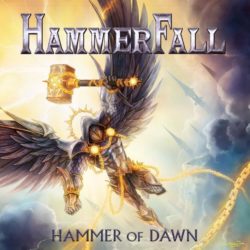
HAMMERFALL Guitarist Explains How KING DIAMOND's Guest Appearance On 'Venerate Me' Came About
Last month, Swedish metallers HAMMERFALL released a new single, “Venerate Me”, featuring a special guest appearance by legendary Danish heavy metal singer King Diamond. The track is taken from the band’s twelfth studio album, “Hammer Of Dawn”, which is due on February 25 via Napalm Records.
In a new interview with Chris Akin, HAMMERFALL guitarist Oscar Dronjak stated about how King Diamond’s contribution came about (as transcribed by BLABBERMOUTH.NET): “I’m a huge KING DIAMOND and MERCYFUL FATE fan — we all are, from our teenage years; we’ve listened to them since the ’80s. And King Diamond is one of those [artists] — if you like King Diamond, you don’t just like him; you love him [and] you love everything about it. That’s just the way it is, for some reason; I don’t know why it is, but that’s how everybody is. So just having King Diamond as a cameo on the album — ’cause it’s really what it is, is a cameo; it’s not like a ‘featuring King Diamond’; it’s not a duet or anything. As much as I would love to do that, that’s not what this is. So what happened was when I wrote this [song] ‘Venerate Me’, I had this part and I thought, ‘If MERCYFUL FATE or KING DIAMOND had this song back [in the day], this is how they would have done it somehow.’ It was just in the back of my head. Then flash forward to album recording, I sat in the chair and I said, more than half joking, ‘Wouldn’t it be cool if King Diamond sang this part instead of Joacim [Cans, HAMMERFALL singer]?’ or whatever, not thinking this is ever gonna happen; of course not. And then our other guitar player, Pontus [Norgren], he’s a sound engineer as well; he works with King Diamond for years — several years — so he knows him. I know this, of course, but just knowing somebody doesn’t mean that this thing is gonna happen. When I said, ‘Wouldn’t it be cool if…?’, he said, ‘I’m sure if I ask him, he’s gonna say yes.’ And I was, like, ‘Are you fucking kidding me? Is there actually a chance, you think?’ ‘Cause then it started turning into, ‘Is [there] actually maybe a possibility of [this] happening?’ And then he called him later that night, and King said, ‘Yes. Of course.’ Right away he sent over the stuff. Then we had months to work on this, to get this ready. And you know how it is when you have a deadline that’s months in the future — you don’t deal with it until it’s closer. So once we were in the mix, that’s when things started to pick up again. [We said] ‘If we’re gonna do this, it has to happen now, ’cause soon it’s gonna be too late.’ And he sent over his file. I talked to him a lot on the phone, explaining what I… Well, actually I didn’t have to explain anything, ’cause I sent the part, like, ‘This is what I hear. Can you sing this? Do whatever you want, but this is what I hear.’ And he tried to explain to me how he wanted it to sound and how he wanted his voice to sound in the mix, so we talked a lot about that. I understood this right away, because King Diamond’s voice, that is his trademark; everybody recognizes that. So he was very particular in terms of how he wanted it to come across. He didn’t wanna just do it and then send off the files and [say], ‘Do whatever the hell you want with it.’ That is not the King Diamond style at all, and I a hundred percent appreciate that; I totally respect that. So we tried to include him as much as we could. We wanted him to be happy — [that was the] bottom line — we wanted him to be happy with the end result because otherwise he might not wanna do it. And we wanted everybody to be happy.”
Oscar continued: “What we had and the detailed things he came up with, it was very small changes. For us, it didn’t mean much at all. It was, like, ‘more vocals here, less…’ whatever — balance, basically, and the sort of effects that were used on the vocals. So we were happy with just anything. But he was really meticulous about getting his voice just right. I mean, can you believe after doing this for 40-whatever — yeah, 40 years now, I think — being this meticulous about something, I have so much respect for that. So once we got those levels and everything balanced, he was happy; we were happy. Boom. That was the last thing that happened on the mix. And then — only then — did I actually believe this was gonna be true. Then I realized, ‘Now we have it. Now it’s done.’ And then I was happy as hell.”
“Hammer Of Dawn” was produced by longtime collaborator Fredrik Nordström (IN FLAMES, OPETH), who handled mixing, mastering, drum recording, and shared the duty of recording guitars and bass with Norgren and Dronjak. Jacob Hansen (VOLBEAT) produced the lead vocals.
Later this year, HAMMERFALL will team up with HELLOWEEN for an extensive co-headlining tour through Europe.
King Diamond is quite possibly one of the most recognizable and prolific personalities ever in heavy metal. Twice Grammy nominated and revered by icons as big as METALLICA and PANTERA, King Diamond, the man and the band, have left an indelible mark on the history, and now again, the future of heavy metal; video game appearances, to festival and touring appearances have helped vault the living legend into the spotlight and in front of new throngs of metal fans. King Diamond’s 40-year musical career is one of the most storied in the history of heavy metal, and the tale is not over yet.
King and his wife, Hungarian-born singer Livia Zita, have a nearly five-year-old son, Byron. The boy was named after King’s favorite singer of all time, late URIAH HEEP frontman David Byron. Livia has been performing with KING DIAMOND as a backing vocalist since 2003.
King Diamond, whose real name is Kim Bendix Petersen, told Metal Hammer in 2016 that he has “become a lot healthier” since he underwent open-heart triple-bypass surgery in 2010. He said: “I gave up smoking after my heart scare, my wife keeps me on a strict diet that I follow completely, and doctors are amazed at how healthy I am these days. Honestly, I think I am now healthier than I have ever been. I’ve also found that, since I made a real effort to have a healthy lifestyle, my voice has improved so much. I can now hit notes that were a struggle for me when I was younger.”
Read more » JUDAS PRIEST's ROB HALFORD On His Cancer Battle: 'I'm Still In Remission'
JUDAS PRIEST’s Rob Halford says that his cancer is still in remission, two years after he was first diagnosed with the disease.
On World Cancer Day, which is observed every year across the globe on February 4 to raise awareness about the deadly disease and its symptoms, the 70-year-old singer took to his Instagram to write: “world cancer day..guys be preemptive get your blood work done regularly..my latest tests reveal I’m still in remission amen #heavymetal #ink #fuck #cancer #prostate #earlybird #good #health #staysafe #love #family #friends #fans #one #world #peace #respect #all”.
Last year, Halford went public with his battle with the cancer of the prostate, a walnut-sized gland that is part of the male reproductive system. In an interview with Spain’s Mariskal Rock, he said: “It’s in remission. I count my blessings — thanks to God. It was a time when… You know, timing is everything in rock and roll and heavy metal. And, of course, this was going on during the pandemic — the initial stages of the pandemic — so the world was completely closed down. PRIEST would have been on a bit of a hiatus anyway, because we had just been around the world three times with [PRIEST’s latest album] ‘Firepower’, so we were gonna be on a kind of a break although we were writing for the new album. And so I was able to take care of three things, really — promote [my autobiography] ‘Confess’, do some writing with the band before I came back [home] to Phoenix, and then get this cancer business sorted out.”
Rob, who previously mentioned his cancer battle in the new chapter added to the updated paperback edition of “Confess”, continued: “It’s just a miracle what they can do with health care these days; it’s absolutely remarkable. So in my story, my main message is to guys everywhere around the world, when you get to a certain age, it’s very important that you get your prostate checked, your bloodwork checked, get a colonoscopy. It’s all these things that old blokes like me go, ‘Wait, wait, wait.’ That’s the worst thing to do. So that was part of the reason I wanted to push the message out. And the fact that it’s been out for a while anyway — it’s been out since September [2021] in the final edition of the ‘Confess’ paperback — so it was gonna surface anyway.”
In “Confess”, Halford revealed that he was diagnosed with cancer after experiencing symptoms for at least a couple of years.
“I felt a combination of shock, horror, and oddly, relief — at least now I know!…’Am I going to die?'” he wrote. ” It was all I could think of. I know blokes who’ve died of prostate cancer. ‘No, you’re not going to die, Rob,’ said Dr. Ali.”
In July 2020, Rob underwent prostatectomy, an operation where the entire prostate gland is removed plus some of the tissue around it, including the seminal vesicles. After more cancer was found early last year, he went through radiation treatments in April and May 2021 and eventually got then all-clear in June 2021. He also had an appendectomy after a tumor was discovered on his appendix.
“It’s been a draining year, I can’t deny it, but I’m delighted to have come through it,” Halford wrote in the book. “I feel like I’ve had the most thorough MOT that a Metal God can have.”
Rob said that his outlook on his cancer battle changed after watching a commercial for the Phoenix Children’s hospital. “It showed kids with cancer,” he said. “Some only babies. They were lying there, with tubes coming out of them, fighting for their lives. They didn’t know what was going on…It made me feel totally ashamed of myself; Rob, how dare you be so selfish? And from that second, I change my entire mental attitude towards my disease.”
“Confess” was released in September 2020 via Hachette Books. It was written with Ian Gittins, co-writer of “The Heroin Diaries” by Nikki Sixx.
View this post on Instagram
A post shared by Metal God (@robhalfordlegacy)
Read more » Former W.A.S.P. Guitarist CHRIS HOLMES Diagnosed With Throat And Neck Cancer
Former W.A.S.P. guitarist Chris Holmes has been diagnosed with a cancer in throat and neck. As a result, he has canceled his appearance aboard this year’s Monsters Of Rock cruise. However, Holmes still expects to be able to complete his previously announced Canadian tour, which is scheduled to launch in Quebec City on May 5 and wrap up in Vancouver on May 28.
The news of the 63-year-old’s diagnosis was shared earlier today by his wife and manager, Cathy-Sarah Holmes. She wrote on his Instagram account: “This post is not easy to write because of the personal nature of it and we would rather you hear it directly from us before stories and rumours start to circulate and by respect for all of you who love and support Chris , we feel that this is exactly what we need at this time. Recently Chris was diagnosed with a cancer in throat and neck but the medical team have assured us there has been no metastasis and this is a good news . He will have to start as soon as possible a treatment of 7 weeks.
“I know how important the Monsters of Rock Cruise is for Chris and the band but the health of Chris is what we have to focus on right now for the next 7 weeks and we will reschedule the MORC for a future date. Thank You very much Larry Morand for your kindness & understanding in this matter, you are much appreciated and the world need more people as you . Thank you also to all the team who make a wonderful work following every band in each step.
“The bandcamp will still continue to run during this time but if there might be some delays please forgive me.
“The best way to keep Chris positive is to continue to focus on the upcoming Canadian tour, shows we have in September and the UK tour in October. Don’t forget Chris is strong and he is a fighter and he will come back stronger than before.
“Many of you in your own way shows us everyday how much you care,we are lucky to have you as friends, your strength keeps our spirits high to continue to fight another day.
“Please we just ask for some privacy while we deal with this at this moment and Chris will come back to you stronger and ready to burn the stage with Stephen, Ollie, Lex and Florian.
“Keep rocking, Chris and Catherine Sarah Holmes”.
Holmes joined W.A.S.P. in 1982 and remained with the group until 1990. In 1996, the guitarist returned to W.A.S.P. and stayed with the band until 2001. Chris has not played with W.A.S.P. since.
Last year, Holmes told SiriusXM’s “Trunk Nation With Eddie Trunk” that W.A.S.P. was “a group, a band” on the first LP. “And after that, the second album, it wasn’t a group — it was a one-man show,” he said. “And it’s been a one-man show after that ever since. It’s the way it is. Look at the records. It’s the way it is in that band.
“W.A.S.P. never played any shows until I was in the band, so where does a band start — when they record or when they do their first show?” he continued. “I came in before the first show, and it was ‘one for all, all for one.’ But then when money came into it and fame, people changed — they change real bad. And I never changed. I don’t change. I haven’t changed the way I think, the way I am. I’m not gonna change. I am what I am.
“During the [making of the] second [album], I was told the manager wants to use Blackie’s [Lawless, W.A.S.P. frontman] image [on the cover], which the manager didn’t tell me that — Blackie told me that.”
According to Chris, he, guitarist Randy Piper, drummer Tony Richards and Blackie were all part of W.A.S.P. initial management contract, but Blackie was the only one signed to the record label. “Everybody thinks we [all] signed to the label, but it wasn’t [like that],” Holmes told “Trunk Nation”.
“I never learned about the business till about 10 years ago,” he explained. “How do you learn about the business? You’ve gotta be in there with the manager and all that stuff, so I was always kept from that… I put my trust into somebody, and [I found out later that he was] sticking a knife in my back. I didn’t find that out until 2010 or ’11.
“Once [W.A.S.P.] became [all about] one person, [my attitude was] ‘Hey, I’ll just do my thing, and leave me alone. I’ll play my guitar.'”
Despite the fact that he only got songwriting credit on a a couple of the songs on each of the first four W.A.S.P. records, Holmes was adamant that his input was essential to the band’s overall sound.
“If I would have quit after the first album, the way I play guitar, the way I play is really important to writing those songs,” he told “Trunk Nation”.
“If I hadn’t joined in the beginning, it would have never worked. Blackie told me that the first day, when he came and talked to me to play in W.A.S.P. He says, ‘I’ve got this band. It’s not gonna work unless you’re in it.’ He told me that to my face.”
In October 2020, Chris said that he would never consider returning to W.A.S.P. unless Lawless agreed to pay him the publishing royalties that he allegedly owes him. He told Canada’s The Metal Voice: “A lot of people think I made money from W.A.S.P. I’ve never gotten my royalties, or even my songwriting. All the stuff that I wrote, I’ve never gotten paid one penny. And you know whose fault it is? It’s my my fault for not knowing the business, how it is. I trusted somebody.
“After every album, when the album is done, how they split up the publishing with the publishing contracts, the publishing companies — that’s where the money comes from,” he continued. “I was never told about when that meeting was. Because the other guys in the band never wrote — I was the only one [other than Blackie]. So I’m the only one that they have to screw over to get all the publishing. So I was never told. Then when I dug into it in about 2006 or [2007], I went into Sanctuary Music, had a lawyer go in to find out where all my publishing is, and I was written in as a session player into all the records. And if you don’t know about it, and you’re not told, and you don’t see, you don’t know. So I trusted Blackie Lawless about that. And when I found out, it really kind of yanked me wrong. It yanks me wrong — it makes me see he was sticking a knife in my back from the first day, from the first album, and not telling me, and being my best friend.”
Last month, Lawless shot down Holmes’s claim that the guitarist was “screwed” out of receiving royalties on the W.A.S.P. albums that he performed on. Lawless discussed Holmes’s tenure with W.A.S.P. in an interview with “Trunk Nation With Eddie Trunk”. Asked to respond to Holmes’s assertion in Chris’s recently released documentary “Mean Man: The Story Of Chris Holmes” that he was financially taken advantage of during his time in the band, Lawless said: “I don’t really know much about… I spoke to [former W.A.S.P. guitarist] Randy Piper a couple of years ago. I don’t really know what’s going on with the rest of the guys. And I’m not sure exactly what you’re talking about with Chris about not being paid.
“Chris, at two different points in his musical career, received settlements from this band; he signed documents as such,” Blackie explained. “And he was paid quite well.
“I haven’t seen what you’re talking about. The answer I’m giving you right now is based on what you just said to me.”
The W.A.S.P. frontman went on to confirm that he hasn’t seen Chris’s documentary and was once again asked about Holmes’s claim that there is money and songwriting credits that he didn’t get that he’s due. Lawless said simply: “That is not true.”
During a November 2017 press conference in Moscow, Russia, Lawless was asked what he would say to those W.A.S.P. fans who continue to call for the band to reunite with Holmes. He responded: “People get divorced for certain reasons, and there’s times when the kids want the parents to get back together, but sometimes it never happens. And this is one of those [times]. Sorry.”
View this post on Instagram
A post shared by Chris Holmes Official (@chris_holmes_official)
Read more »