

Graphic Nature: Dealing In Discomfort
GRAPHIC NATURE only have about six or seven proper songs to their name, but they already have a visual style distinctly their own. Their music videos are all awash in…
Read more »
Track Premiere: Writhing Shadows – “Warplust Contortions”
Bringing you the first track from the long-awaited full-length from Alabama gravefillers Writhing Shadows.
The post Track Premiere: Writhing Shadows – “Warplust Contortions” appeared first on Decibel Magazine.
Joe Appleford releases new music video for ‘The Escapist’
JOE APPLEFORD has released a new music video! The new music video, for the track The Escapist, is the brand new single from the former BAD SIGN vocalist and follows on from his last…
Read more »
TWISTED SISTER's DEE SNIDER: 'Grunge Cured Hair Metal'
TWISTED SISTER singer Dee Snider spoke to Tom La Vecchia of Armchair MBA about how the rise of grunge in the early 1990s forced most hard rock bands off the radio and MTV, with album and tour sales plummeting. Asked if he saw Seattle bands like NIRVANA and SOUNDGARDEN slowly gaining popularity of at the expense of 1980s metal, Dee said: “Well, no one saw it coming, but I was already dead and semi-buried before grunge hit. TWISTED arrived in the early ’80s and then we hit our stride in the mid-’80s and by the late ’80s, the band had broken up. I had a band called DESPERADO [with former IRON MAIDEN drummer Clive Burr and ex-GILLAN guitarist Bernie Tormé] that got shelved by Elektra Records; a lot of money we spent on that record. So I was sort of already removed as a featured artist by that point, and I was struggling trying to find my footing with DESPERADO and then WIDOWMAKER. And then I got the letter in the mail, certified letter, ‘We have decided we’re no longer doing what you do — look like you, sound like you, sing like you, write like you, perform like you. We actually don’t want anything to do with anything you ever did. Sincerely, the music-buying public.’ [Laughs] And that’s when the bottom really fell out. I mean, imagine being a doctor who studied a form of medicine, and they found a cure for it. You’re a cancer specialist — a specialist; it’s what you dedicated your life to — and you get a pill that cures [cancer]. You’re out of work. Grunge cured hair metal. So I was out of work.”
Less than two years ago, Snider told Ultimate Guitar that he “loved” NIRVANA and other grunge bands when they emerged. “When they first came out, it wasn’t even called grunge,” he explained. “And this is the thing about titles — even heavy metal, punk, hair metal, those are not titles chosen by the artists; they’re titles chosen by the writers. And usually as a negative connotation. Usually as a form of a putdown. And the artists that they called grunge, called punk, called heavy metal — they hated it. This is a fact, dude. I’m old. I know this, a fact: if you mentioned grunge to SOUNDGARDEN or PEARL JAM, they got physically violent with you. They were just a rock band. And if anything, SOUNDGARDEN, ALICE IN CHAINS, they were metal bands. They were touring with Ozzy [Osbourne]. It just became defined by some writers; they pigeonholed it and called it a new sound.”
Dee continued: “When it first came out, I was, again, doing metal radio, and I was playing ALICE IN CHAINS, SOUNDGARDEN, NIRVANA on my show, and I was like, ‘This is great, heavy new stuff.’ So then it became defined as grunge, and then it was the hair metal killer, and that was awful.
“But I don’t blame it on the music; hair metal did it to itself. It became too commercialized, and then it got unplugged and became nothing but power ballads and acoustic songs, and it wasn’t metal anymore. It had to go; it had to change.”
Upon release in September 1991, NIRVANA’s “Smells Like Teen Spirit” wreaked confusion upon the hair metal vanguard, putting an end to an era dominated by glamorous, androgynous and sparkly rock stars who absolutely saturated the radio waves and were almost exclusively what aired on MTV.
Snider’s TWISTED SISTER bandmate Jay Jay French told Daniel Sarkissian of the “Rock Is Dead?” documentary about the death of hair metal and arrival of grunge: “The only band that leapfrogged and saved themselves was GUNS N’ ROSES. And my theory is that GUNS N’ ROSES was not perceived as a joke. They came out of L.A., but I think that Axl [Rose], first of all, had a great voice. I think that they were perceived as real, not fake. Like, they were real junkies, not pretend junkies. So there’s an authenticity. It’s all about authenticity, and grunge is all about authenticity. People wanted authenticity, so they got it with grunge. It wiped out the perceived frivolousness of hair metal, which is, ‘Hey, man. Let’s party. Let’s get the girls and drink.’ I think people just got sick of that, and they wanted [something more] authentic.”
Former MÖTLEY CRÜE singer John Corabi told Newsday in a 2014 interview that the CRÜE album he sang on was a commercial disappointment because the music scene had changed, with hair metal brushed aside for grunge.
“Everybody was listening to ALICE IN CHAINS and SOUNDGARDEN,” Corabi said. “At that point, we were considered passé.”
According to Corabi, CRÜE’s ill-fated 1994 American tour ” was a nightmare. We weren’t selling tickets. It was just horrible,” he said.
In 2019, former TNT singer Tony Harnell said that the rise of the grunge movement, which symbolized the working-class spirit and focused on music over image, was ultimately a positive thing for the rock genre because it “shined a really harsh light on how boring and repetitive” the ’80s glam metal scene had become. He explained: “It was the same look, the same songwriters, the same producers, and it just started to be… Nobody was offering anything… Don’t get me wrong, there were a few that got in there that were interesting and different, but, for the most part, they were all just sort of rehashes, slightly, of other bands.”
Read more » Audrey Horne release new music video for ‘Danse Macabre’
AUDREY HORNE have released a new music video! The new music video, for the track Danse Macabre, is taken from the Norwegian hard rock band’s upcoming new album, Devil’s Bell, which is scheduled…
Read more » TESLA Will Concentrate On Releasing One New Song At A Time, Not A Full-Length Album
In a new interview with “Chris Akin Presents…” , TESLA guitarist Frank Hannon was asked if there are any plans for the band to work on a full-length album following the release of the “Cold Blue Steel” single, which came out last August. He responded (as transcribed by BLABBERMOUTH.NET): “Right now, after we did the ‘Shock’ album [in 2019] and the way things are right now, we’re only gonna concentrate on one song at a time. We’re pushing late 50s, mid 60s in our age, and the bottom line is there’s no need to put the pressure on a deadline of you’ve gotta fabricate 10 songs by the first of June and force it. So, we’re not gonna do that. We’re gonna just write songs as they come and as we feel them, and put ’em out as singles right now. The whole idea of trying to cram an album for the sake of cramming an album doesn’t appeal to us.”
Pressed about whether TESLA will eventually compile all the standalone singles and release them as a full-length CD, Hannon said: “Absolutely. Maybe a box set. Maybe some kind of collection of some sort. We do have a lot of outtakes and some things that we’re gonna work on. But right now I’m just happy doing one song at a time. And at the end of the year, if we’re able to squeeze out eight or 10 of ’em, then we’ll put ’em all together.”
Earlier in the month, TESLA released the official lyric video for “Cold Blue Steel”. The clip, directed by Brandon Gullion and produced by Hannon, is raw and high electric energy that takes fans back to the roots of TESLA.
Hannon stated: “‘Cold Blue Steel’ is influenced by current events of the world, just like our debut single ‘Modern Day Cowboy’ (1986), and touches on the subject fairly and open-minded by asking ‘what’s to blame?’ when it comes to violence in the world. More importantly, the recording and production of the song and video are kept raw and real, just the way TESLA fans want to see and hear us. We are survivors and have been rocking for 35-plus years.”
The 2022 radio remix version of “Cold Blue Steel” is being offered as the version for the airwaves with the guitars and vocals being cranked up louder and with the raw energy being preserved. Frank explained: “Some folks were reluctant to play the track with its explicit lyrics in the verse, so I created a clean version for radio with a bleep. As a bandmember and being the producer, we approve of these changes and really love the remixed audio enhancement for radio play. This is TESLA in real honest form and independently producing our music for the first time as an official release.”
“Cold Blue Steel” is the first TESLA song to ever be produced by the bandmembers themselves.
“Producing ourselves is allowing us to creatively record new music and keep it as raw and real as possible,” Hannon said.
Last December, Hannon told Let’s Rock that the lyrics to “Cold Blue Steel” have been partially misinterpreted by some fans.
“We’ve been getting a lot of flak from people that only hear the couple of verses in the song, thinking it’s about gun control,” he said. “And in a way it is, but, really, it’s so much deeper than that, the lyrics. We try to definitely not take sides and be political but we wanna sing about a situation. Something like what we did with ‘Modern Day Cowboy’ in the ’80s; we sang about foreign lands and terrorist demands and ‘bang bang, shoot ’em up’ and how that attitude was still happening in the world at that time, being a gunfighter, cowboy situation, but we’re not pointing fingers. And that’s the same way with this song, but some people only hear parts of it and have been giving us some shit about it. But if you listen to the lyrics, it’s asking a question, ‘What’s to blame? Let’s get real.’ And the song is really about people that you give ’em an inch, they take a mile — whether it’s a politician, whether it’s a crook, whether it’s a police officer. And we support our police.”
He added: “There’s evil intentions in all parts of life, and that’s what the song is really about — just observing and asking the question, ‘What’s to blame?’ It’s not talking about ‘take away guns’ or any of that shit. But it started off just being a fun poke at Ronnie Van Zant. That last lyric in the song, ‘Just like Ronnie said, ‘Let’s dump ’em to the bottom of the sea,’ that’s where the song started for fun. And then we took it and tried to make it a little bit more serious.”
TESLA has U.S. shows scheduled throughout the spring and summer.
Read more »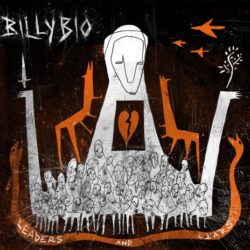
ALBUM REVIEW: Leaders And Liars – BillyBio
Billy Graziadei aka BILLYBIO returns with his new album Leaders And Liars. The follow-up to his debut Feed The Fire, it’s an even more incendiary collection of songs that takes…
Read more » Bloodywood: Traversing The Continents And Beyond
‘You can grow old, but never grow up.’ This quote rings loud and clear in the excitable voices of BLOODYWOOD, the childlike wonderment still evident in their passion for the…
Read more » Joe Satriani reveals the song that was impossible to play live: “My hand didn’t want to do it live. It started to really hurt”
“Once in a while, you write something you probably shouldn’t have written,” joked Satriani about this song
Read more »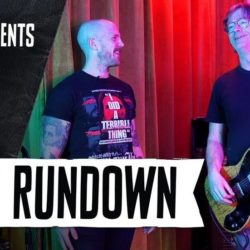
Rig Rundown: Shiner
See how dense, complex, serrated post-hardcore pummels and blooms—thanks to some pawn-shop prizes, a scratch-and-dent steal, and a unison bass tuning.Shiner sprouted from the fertile, black-dirt underground rock scene of the Midwest. Cofounded by guitarist/vocalist Allen Epley in 1992, the band toured with contemporaries Sunny Day Real Estate, Chore, Jawbox, Season to Risk, the Jesus Lizard, and Girls Against Boys, recorded with Shellac’s Steve Albini, and released four albums between 1996 and 2001. Injections of new blood for 1997’s Lula Divina (bassist Paul Malinowski) and 2000’s Starless (Josh Newton on keyboards/guitars and Jason Gerken on drums) helped carve fresh ground and broaden their sound.Shiner’s sweet spot lives among the smoldering soundscapes that brood, blossom, and bolster their cannonball core. The Egg, from 2001, was a crowning achievement—the early career apex of the band’s evolution from noisy dissonance and powder-keg rock to mosaic, prog-like orchestrations that were equally brutal and beautiful. And after nearly two years of touring behind The Egg, the quartet split up in 2003.Over the next 15 years, Shiner reunited for special one-off appearances and very short tours. And with the help of the internet and streaming services, their low-key, dormant profile was elevated. Finally, in 2020, Shiner came back to the table with Schadenfreude–a shockingly logical evolution from and continuation of The Egg’s sonic flavor. The album has the lyrical earworms, head-nodding rhythms, gut-punch oomph, and palette-cleansing space travel you’d expect from a band that said goodbye with the jewel “The Simple Truth.”Ahead of Shiner’s show at Nashville’s DIY arts collective, Drkmttr, PG hopped onstage to dissect the current setups of Epley and Malinowski. Epley details how a lunch-break pawnshop visit landed a remarkable Hohner T for under $100. Malinowski reveals the unique tuning (and demonstrates the monkey-grip it requires to play) that allows his setup to charge like a rhino. And both walk us through their practical-but-powerful pedalboards.(Unfortunately, renowned gearhead, resident of Pudgemont County, and a regular at the Chug Suckle, Josh Newton, was not on this run as he was tech’ing for Kings of Leon. Spotlights’ Mario Quintero played the role of Newton for this batch of shows, and we featured his setup—along with wife/Spotlights bassist Sarah Quintero’s rig—back in 2021.)[Brought to you by D’Addario Nexxus 360 Rechargeable Tuner: http://ddar.io/Nexxus.RigRundown]A “Trashy Toy Tele” Becomes the OneIf you’ve seen Shiner and Allen Epley, you’ve seen this T-style that’s been to hell and back. Epley’s live staple is a Hohner HG-428N—a Japan-made copy of a Fender Telecaster Deluxe. While Epley has owned the instrument for 30-plus years, he contends that its abuse was dished out prior to scoring this prize at Sol’s Pawn in Kansas City, Kansas. Shiner bassist and extreme bottom feeder Paul Malinowski did the wheeling and dealing and helped Epley land it for under $100. It’s been overhauled several times, to keep it running strong, but Epley feels this one provides a live tone that’s unmatched by anything he owns and adds to Shiner’s sting. He goes with Dunlop Performance+ strings (.011–.050) and is locked into D-standard tuning.Blacktop BackupIf anything haywire happens to the Hohner, Epley has this Fender Blacktop Jazzmaster HS that was picked from Chris Metcalf, who plays drums in Allen’s other band, the Life and Times. It’s been upgraded with a Staytrem bridge by fellow Shiner bandmate and tech extraordinaire Josh Newton.Mind the GapThe solid, stratified sound of Shiner starts with Epley’s stereo setup. The first part of the potent platform is his 1997 Vox AC30 Top Boost reissue that he bought brand new. He loves how it sits in the mix and “fills the gaps in the middle” like double-meat in a club sandwich.Tommy’s Hiwatt?Surrounding and supplementing the Vox’s mid-focused heft is the above 1971 Hiwatt Custom 100 that chimes in with glassy highs and plenty of low-end heft. He plucked this gem from fellow KC rocker Duane Trower of Season to Risk for $500 cash and a lesser amp. (Epley clearly won that trade.) During the Rundown, he semi-confidently asserts that the head was used for the touring production of the Who’s rock opera Tommy. He uses it with guitar and bass, and it’s been souped-up by turning the normal volume control into a throttle for the pre-gain, giving the amp more grind and growl. The Custom 100 hits a 2×12 cab (procured by Josh Newton) that has a pair of 35-watt speakers.Allen’s ArsenalThe first two parts of Epley’s pedalboard start on the floor. The TC Helicon Harmony Singer integrates with his guitar—reading whether the chord he’s playing is major or minor—and then accompanies his vocals with a predetermined harmony either above or below his singing key. Next in line on the floor is the Ernie Ball 6166 Mono Volume Pedal. After that is a double dose of dirt compliments of MXR: a Super Badass Distortion and Micro Amp+. Following those is an Electro-Harmonix Micro POG that Epley calls a “kaleidoscope of sound.” A MXR M300 Reverb provides plenty of canyon far and wide, while the Line 6 DL4 spreads Epley’s tone to both amps for stereo delay. A Boss TU-2 Chromatic Tuner keeps his guitars in check and a MXR ISO-Brick M238 powers the pedals.Paul’s Project PThis P bass started its life as a ’90s MIM Squier model. The only thing stock on the entire instrument is the body. It has a new pickguard, enhanced electronics, a custom-wound pickup from Fountain City Guitarworks (Kansas City), a NOS Kramer Schaller bridge from the ’80s, and a custom neck finished and fine-tuned by KC producer/luthier Justin Mantooth. The secret sauce to Paul Malinowski’s setup and rhino-charging tone has nothing to do with gear, but rather the unison tuning (C-G-C-C) that he employs for most of Shiner’s songs. He hammers away on Dunlop strings (.050–.110) with Dunlop Tortex .73 mm picks (yellow).A Blast From the PastPrior to bringing the project P into the mix, Paul would rely on this Fender Elite Precision Bass II. As with a lot of instruments made in the ’80s, there was some serious innovation on deck. Fender’s high-end attempt at an active bass features noise-cancelling, split-coil passive pickups (Paul mentions the bridge pickup is thin sounding and never stood a chance in Shiner), an active preamp that boosts output and improves control operation, and a Bi-Flex truss rod (allowing adjustments in both directions). This one often rides in D-standard tuning (D-G-C-F). Paul feels this instrument has “a little more throat to it” than the Squier P. And a big reason this Elite looks anything but is because Paul shredded away its finish when he played with flexible copper picks for years.Pulverizing With PeaveyDuring Shiner’s initial run, Malinowski pumped his Ps through a Mesa/Boogie 400+ and 2×15 cab. After the band stopped touring, he sold the rig to a friend. On the lookout for a new setup, he found luck with this Peavey Classic 400 that he scooped for $50 from the Musician’s Friend scratch-and-dent warehouse in Kansas City. The fault was resolved with a fresh fuse cap. The 400-watt bruiser runs off 14 tubes (eight 6550s, five 12AX7s, and one 12AT7). Malinowski lives in the crunch channel.Ranger Rock Ready for DutyThis custom-made Ranger 2×15 was built by fellow Kansas City dweller Scott Reed. The design removed the industrial vibes of the ported Mesa Diesel cab he previously used for an heirloom furniture look. It does have a pair of EV15L drivers in it, too.Malinowski’s Mass DistortionThe signal from the P goes into the Ernie Ball VP Jr that feeds the Boss TU-2 Chromatic Tuner. The first two tone ticklers are both always on. The Boss GEB-7 Bass Equalizer simply slides out the 500k frequency and the Maxon OD808 Overdrive reissue aggressively agitates the Classic 400. When Pete needs to restrain his buffalo bass tone, he pulls back the volume or changes his playing dynamics. The MXR EVH Phase 90 gets used along with an EBow. The DigiTech Bass Whammy gets used with the EBow and phaser, but is also engaged (in the low-octave setting) when he’s playing riffs on just the unison high strings to thicken everything up. The Boss MT-2 Metal Zone gets center stage for the Starless song “Giant’s Chair” or anytime he wants to ride the feedback bull. The MXR Tremolo has its moment during the intro of “Giant’s Chair” (joining the MT-2 to create a buzzsaw super chop). And the TC Electronic Flashback dazzles and delays in spacy sections.
Read more »