
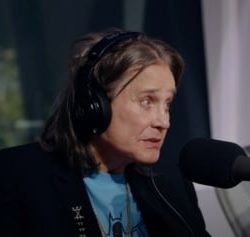
OZZY OSBOURNE: 'I Will Get Back On Stage If It F***ing Kills Me'
Heavy metal legend Ozzy Osbourne and his wife/manager Sharon sat down with Apple Music’s Zane Lowe to break down Ozzy’s latest studio album, “Patient Number 9”.
The trio get an unexpected call from Ozzy’s producer Andrew Watt, who shares what it really takes to create an Osbourne album. Ozzy goes on…

ALBUM REVIEW: Netherheaven – Revocation
REVOCATION have been tearing their own ingenious path through the rich tapestry of the metal world for almost two decades, continually blowing everyone away with their fearless creativity and distinct…
Read more »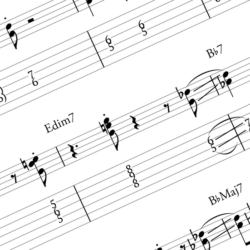
Defensive Guitar: How to Trim the Fat & Stop Playing So Damn Many Notes
The intersection between guitar and piano is ever present—and so is the potential for harmonic conflict, especially when improvising. However, guitar and piano can be a wonderful combination. Listen to the recordings of Pat Metheny and Lyle Mays, or Jim Hall and Bill Evans for stellar examples. But if your ears aren’t turned up it can be a recipe for disaster.Often, the paradigm on the bandstand is that if there is a harmonic clash between the guitar and piano, it’s automatically the guitar player’s fault. So how do we deal with this? There are a couple of methods to take a more defensive approach, but the one we’ll address is to learn which notes to omit. Trim down those chords and be nimbler and stronger. Chords with more than two or three notes are, for our purposes, a full-on failure. The good news is that these lean-and-mean chords are easy to play and, within the context of the band, sound way better than the ubiquitous barre chord.The basis of the chords we’re looking at are subsets of chords that are likely already very familiar to you (Ex. 1)The “money” in these chord forms is literally in the middle of the chord. On the 3rd and 4th strings lie the 3 and 7 of the chords. These are the most important two notes of your chord. The different variations of the 3 and 7 give each chord its unique color, such as major 7, dominant 7, or minor 7.If we reduce these chords to their essence, we get the shape in Ex. 2. This trims down the Bb7 to Ab and D, while the C7 is simply the E and Bb. These notes are sometimes referred to as guide tones. We’ll move this shape up or down the fretboard to accommodate each required chord quality.Ex. 2We’re only going to use two other interval shapes in addition to the tritone. In Ex. 3 you can see a perfect fourth on the left and a perfect fifth on the right. They are super easy to play and ultra-effective in our journey to more defensive guitar playing. Feel free to use whatever fingering suits you.Let’s put these shapes in context. In Ex. 4 you can see how these shapes work with a 6th-string root (top row) and a 5th-string root (bottom row). I’ve included the root notes simply for reference and to help you better visualize the shapes. In a solo setting you may even want to include the roots.An excellent “closet organizer” for musical data is the 12-bar jazz blues form. In Ex. 5 I use our core family of shapes to work through an entire progression. I’ve made sure to include dominant, major, minor, and diminished chords in this example. The first step should be to play it with the roots and then try to “hear” the roots while playing only the guide tones.The absolute undisputed king of playing these types of chords is Freddie Green, who was the longtime guitarist in the Count Basie Band. He made an entire career of playing quarter-note rhythms and being the glue that held the rhythm section together. In Ex. 6 you can how Green might play a 12-bar blues in Bb. Check out the chromatic movement in the last two measures. It’s amazing how smooth you’re able to connect the chords using only two notes.Admittedly, the rhythm is a bit bland and feels sterile. In Ex. 7 I play the exact same chords but add in a bit of chromatic movement and some offbeat rhythms. The occasional extension (9, 11, or 13) is cool, but pick your spots wisely. Listen to the piano and look for your space. This same concept can be applied to your single-note improvisations as well. In fact, this is a valuable step in learning to play over changes. The goal is to outline the chords so well that your ear can imagine the harmony going by. In Ex. 8 you can see how I might approach this. Notice the lack of “blues licks.”While it always looks cool on your IG page to be seen playing stretchy Alan Holdsworth-looking chords, sometimes it’s the simple and economic approach that goes down easiest. Whether comping behind a singer, playing with a jazz big band or playing chords and walking bass Joe Pass-style, the defensive approach to harmony can oftentimes be your ticket to ride.
Read more »
IN THIS MOMENT Singer MARIA BRINK Falls Ill; Charlotte Concert Postponed
Due to illness, IN THIS MOMENT was forced to postpone its concert last night (Friday, September 9) at The Fillmore in Charlotte, North Carolina.
On Friday, The Fillmore shared the following statement via social media: “ATTENTION IN THIS MOMENT fans: Due to illness, Maria Brink of IN THIS MOMENT will…

Strigoi release new music video for ‘An Ocean Of Blood’
STRIGOI have released a new music video! The new music video, for the track An Ocean Of Blood, is taken from the death/doom metal band’s upcoming new album, Viscera, which is scheduled to…
Read more »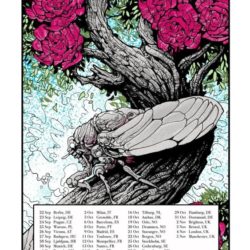
Pallbearer release new live music video for ‘Vengeance & Ruination’
PALLBEARER have released a new live music video! The new live video, for the track Vengeance & Ruination, showcases the American doom band performing the track at St Vitus in Brooklyn, last…
Read more »
STAIND's New Studio Album To Be Released In 2023
STAIND guitarist Mike Mushok has told Western Mass News that the band is working on a new album, which he said should be released sometime next year.
In a separate interview with Atlantic City Weekly, Mushok said that both he and STAIND frontman Aaron Lewis will continue to pursue other projects —…
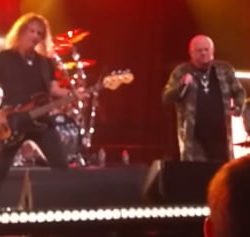
Former ACCEPT Members PETER BALTES And UDO DIRKSCHNEIDER Reunited On Stage In Berlin (Video)
Former ACCEPT bassist Peter Baltes is playing bass for U.D.O., the band fronted by original ACCEPT singer Udo Dirkschneider, on the group’s ongoing European tour. Baltes is filling in for U.D.O.’s regular bassist Tilen Hudrap who was hospitalized after the band’s show in Munich, Germany on Sunday, S…
Read more »
ARCH ENEMY's MICHAEL AMOTT: I've Always Been Interested In A Blend Of 'Aggression' And 'Melody'
In a new interview with Rauta, ARCH ENEMY guitarist Michael Amott was asked if he gets any inspiration to listening to newer metal bands. He responded (as transcribed by BLABBERMOUTH.NET): “I don’t really listen to current metal deeply. I’ve had a very wide taste of music. I grew up in a kind of ecl…
Read more »
OPETH Enlists Ex-PARADISE LOST Drummer WALTTERI VÄYRYNEN
Swedish progressive metallers OPETH have announced Waltteri Väyrynen (PARADISE LOST, BLOODBATH, BODOM AFTER MIDNIGHT) as their new drummer. Väyrynen will make his live debut with OPETH on September 14 in Tallinn, Estonia. He will replace stand-in drummer Sami Karppinen who has been the temporary rep…
Read more »